Selected list of publications (my first and last author papers)
This is a list of the papers I’m most proud of. The order is not chronological, but rather emotional :). for a complete, chronological list please see Google Scholar

Building modern coexistence theory from the ground up: The role of community assembly, JurgW. Spaak and Sebastian Schreiber, 2024
we expand modern coexistence theory to include non-coexistence. Specifically, MCT depends on the invasion growth rate, which may not exist in species rich communities or lead to wrong conclusions about coexistence. With our new invasion graph we solve both these issues Twitter feed with main results
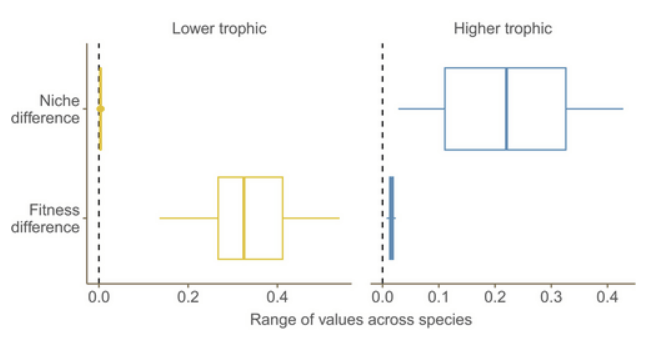
Trophic tug-of-war: Coexistence mechanisms within and across trophic levels, Chuliang Song and JurgW. Spaak, 2024
We apply modern coexistence theory to multi-trophic communities. If each trophic level is analysed independently then trophic levels behave similarly. However, if we focus on the entire community then we find that lower trophic levels are driven by fitness differences while higher trophic levels are driven by fitness differences. Twitter feed with main results
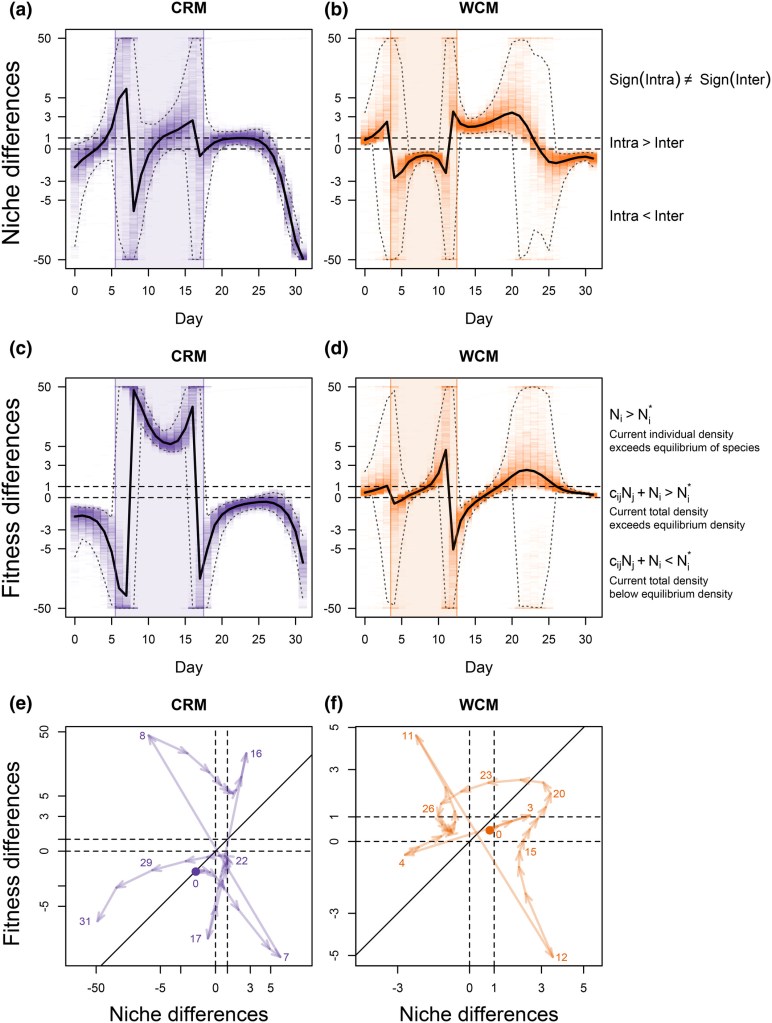
Higher-order species interactions cause time-dependent niche and fitness differences: Experimental evidence in plant-feeding arthropods, Agnieszka Majer, Anna Skoracka, Jürg Spaak*, Lechosław Kuczyński*, *joint last author ship
We apply modern coexistence theory to biotic interactions and allow niche and fitness differences to change over time. We discovered a way to deal with intraspecific facilitation on the process and found that niche and fitness differences change A LOT over the course of the interaciton. Twitter feed with main results
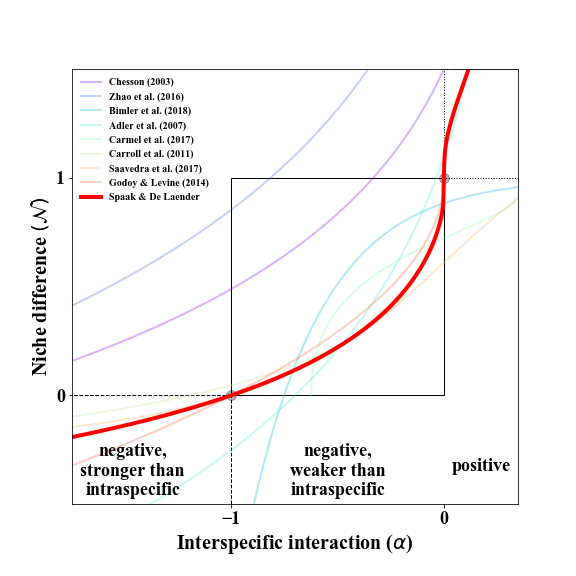
Intuitive and broadly applicable definitions of niche and fitness differences, Jurg W. Spaak and Frederik De Laender, 2020
We introduce new definitions of niche and fitness differences that can be applied to a much more general collection of community models. Importantly, these definitions align with intuition and can be applied to mutualistic communities.
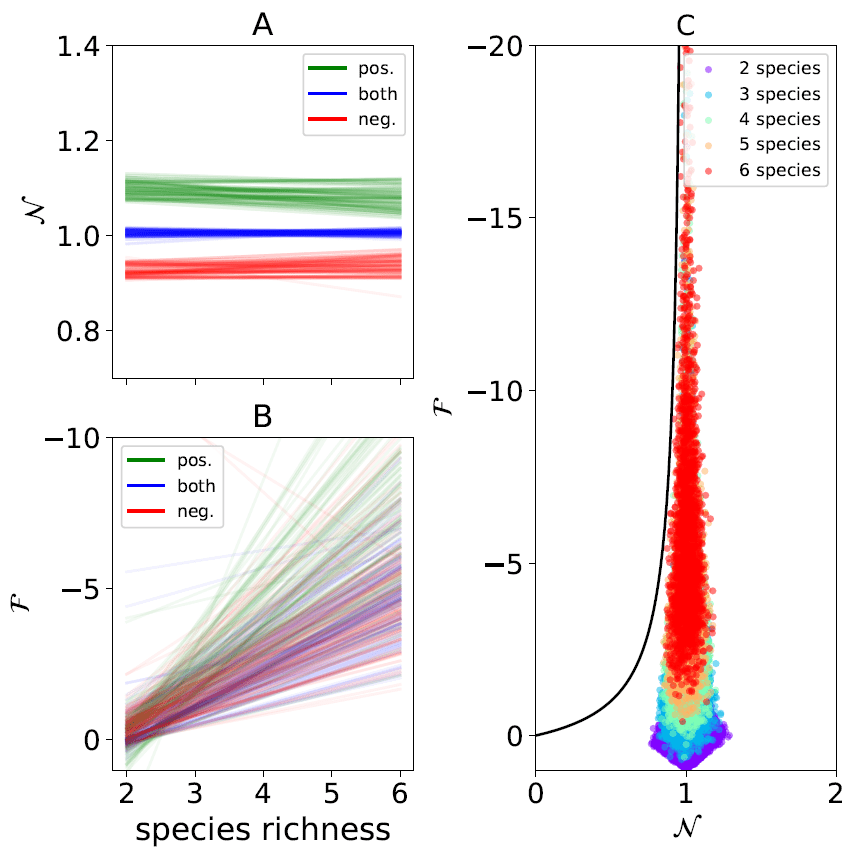
Fitness differences, not niche differences, limit species richness, Jurg W. Spaak, Camille Carpentier, Frederik De Laender, 2021
The basic result is simple (and worthwhile to retain), species richness increases fitness differences increase (Panel B), but niche differences (Panel A) are not affected. Species richness is therefore limited, because the species move “upwards” towards coexistence boundary (Panel C) Twitter feed with main results
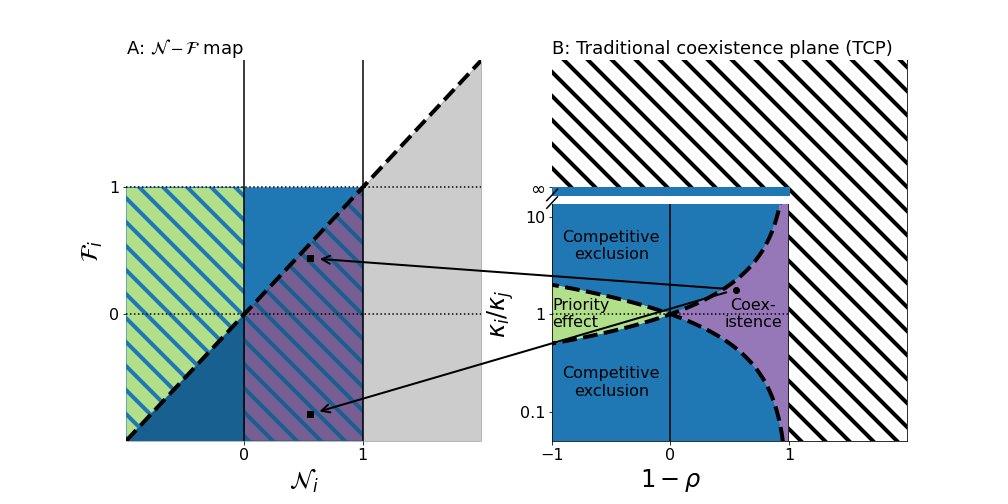
Mapping species niche and fitness differences for communities with multiple interaction types, Jurg W. Spaak, Oscar Godoy, Frederik De Laender, 2021
We use niche and fitness differences to map species interactions. This map allows cross community comparisons and serves as a common currency between different fields. We also show which part of the map are well explored (competitive communities and priority effects) and which deserve more attention (facilitation and higher trophic levels). Twitter feed with main results
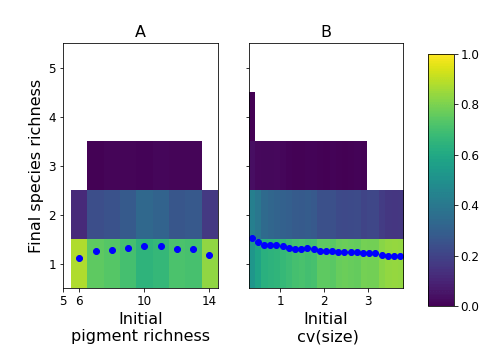
Effects of pigment richness and size variation on coexistence, richness and function in light limited phytoplankton, J.W. Spaak, F. De Laender, 2021 Journal of Ecology
We simulate light limited phytoplankton communities and compute their species richness, niche and fitness differences and ecosystem function. The positive effect of trait richness on ecosystem function and species richness is initially strong, but coexistence requirements reduce trait richness and therefore the positive effect vanishes over time. Twitter feed with main results
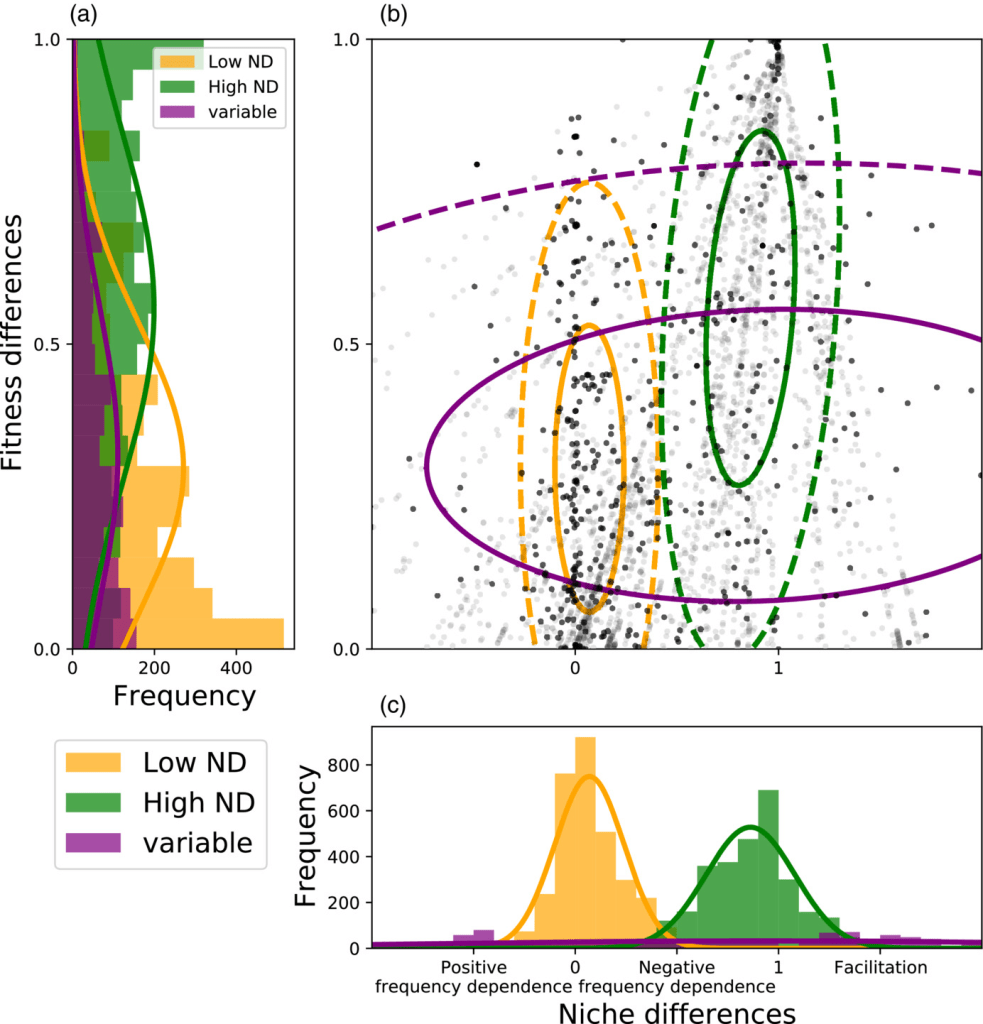
Niche differences, not fitness differences, explain predicted coexistence across ecological groups, L. Buche, J.W.Spaak, J. Jarillo and F. De Laender, 2022 Journal of Ecology
Really cool work with my former master student Lisa Buche (go and check her out). She did a huge metanalysis of all empirically measured niche and fitness differences. Interestingly, the data can be clustered in mainly two clusters, one with high niche differences, which contains essentially all coexisting species pairs. And one with low niche differences, without coexistence. Fitness differences appeared to be much less important (yes, I know this is different than the finding in my multispecies paper). Twitter feed with main results
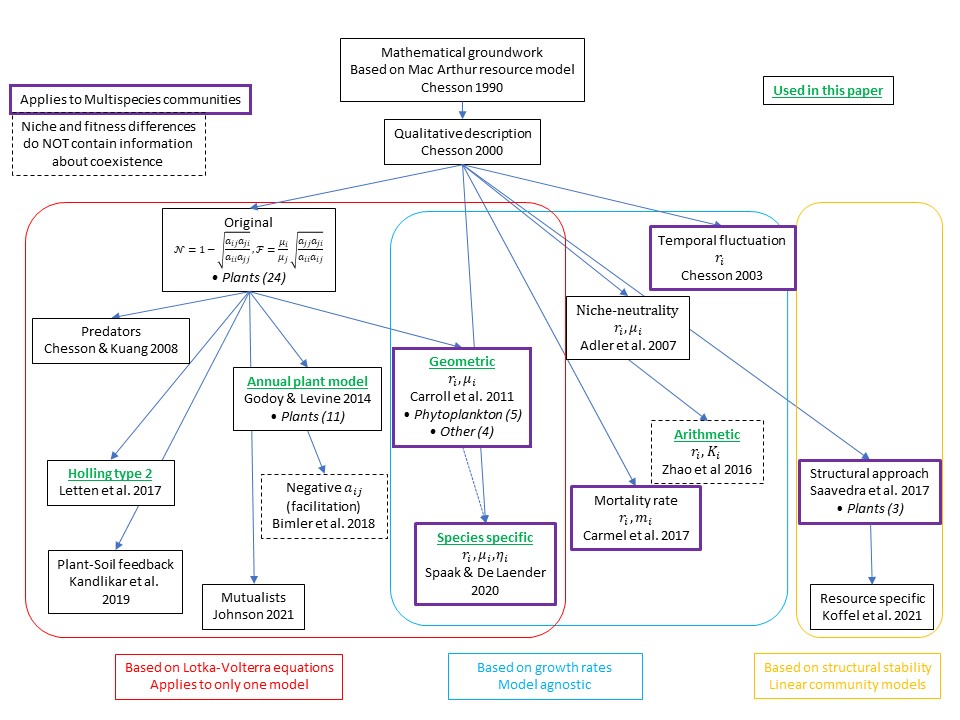
Different measures of niche and fitness differences tell different tales, Jurg W. Spaak, Po-Ju Ke, Andrew D. Letten, Frederik De Laender, 2022, OIKOS
We review the large variety of different methods to assess niche and fitness differences (more than 13 methods) and group them into 3 loose groups. We then go on to show that these methods lead to very different interpretations of which process is important or what actually stabilizing means. However, we currently do not have the tools to evaluate which of these methods are the best, but we do offer criteria to potentially evaluate this in the future. Twitter feed iwth main results

The effect of non-linear competitive interactions on quantifying niche and fitness differences, Jurg W. Spaak, Remi Milet, Po-Ju Ke, Andrew D. Letten, Frederik De Laender, 2023, Theoretical ecology.
We compare two different methods to assess niche and fitness differneces and apply them to 4 different community models to understand their advantages and disadvatages. We show that the typically used method based on the pair-wise Lotka-Volterra method does not catpure important features of the underlying community model. Conversely, the more comlex method based on Frederik’s and my work is able to capture the underlying complexity of the community model. Twitter feed with main results
 Jurg W. Spaak